Complete guide
Albania: The Complete Travel Guide
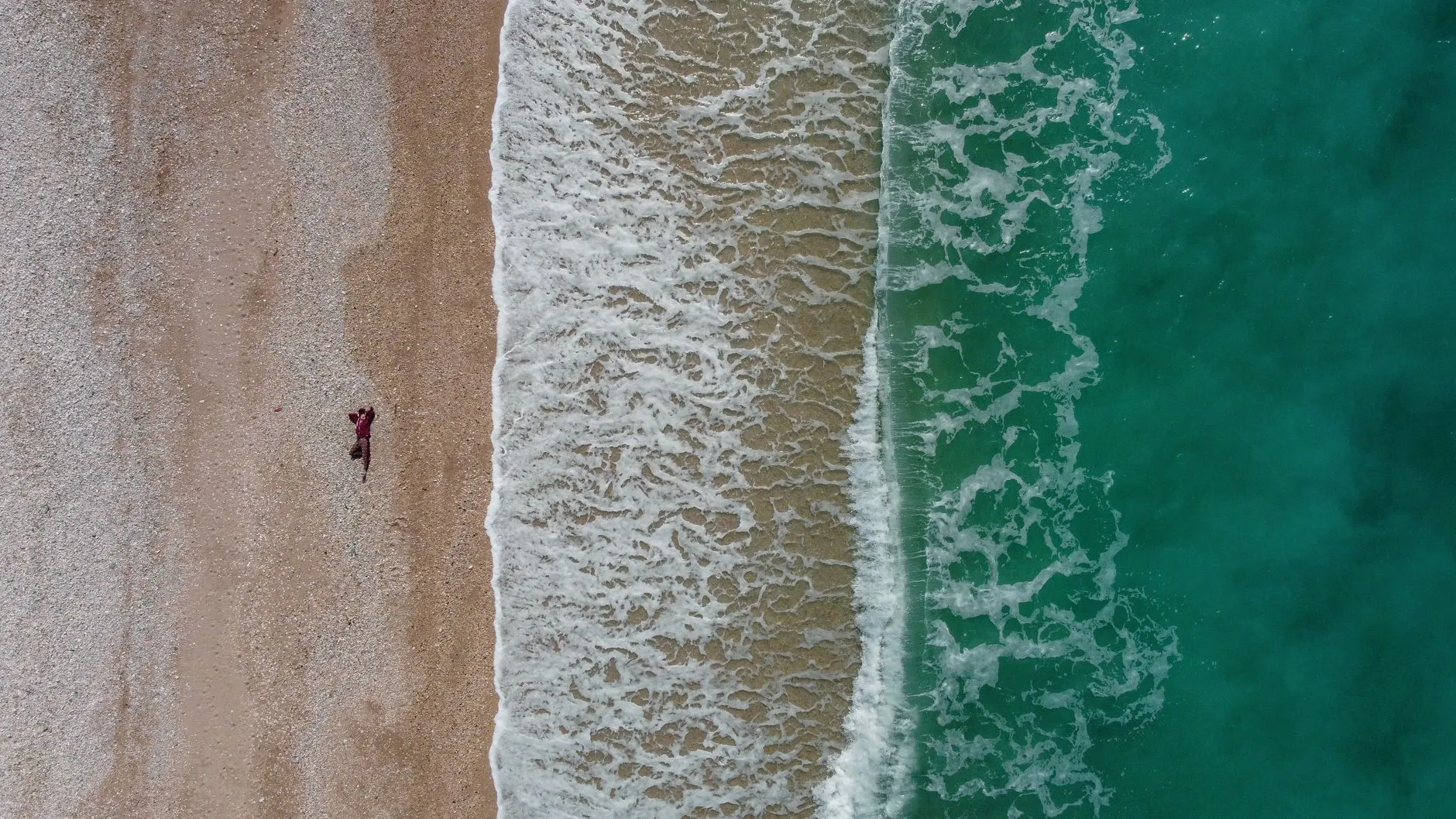
Albania is the destination travellers discover late — usually after they have already done Greece, Croatia and Italy, and quickly understand why it took so long. The same turquoise Adriatic and Ionian seas, the same beaches and cliffs, but at prices that vanished from the rest of the Mediterranean a decade ago. A small country, barely the size of a single Italian region, that packs in beaches, stone Ottoman towns and Alpine peaks — all within a few hours’ drive of each other.
After nearly fifty years of communist isolation that sealed it off from the world, Albania opened up fast and still feels a little rough around the edges — which is exactly the charm. Before you book a flight there are a few things to settle: how long to spend, when to come, how to move around, and how much money to bring. We cover all of them here, and each section opens into its own in-depth guide.
Why Albania
Albania’s strongest card is the short distance between completely different worlds. You can open the morning on a turquoise beach in Ksamil, reach a stone Ottoman town in Berat by afternoon, and the next day start a trek between peaks in the northern Alps. One small country holds a Greek coast, a Turkish town and a Dolomite-like range — with no domestic flights and no vast distances.
The second point, and the one that brings people back, is the price. Albania is still one of Europe’s cheapest destinations: a full meal at a local restaurant runs 700–1,200 lek (about €6–11), a coffee 100–150 lek, and good accommodation is easily found under €50 a night. For anyone arriving from Greece or Italy it is a genuine relief.
How many days you need
There is no single answer, but a few frameworks work:
- 5–6 days — Tirana and the south only: a day or two in the capital, then down to Sarandë, Ksamil and Butrint. Tight, but it makes sense if you are folding Albania into a wider Balkan trip.
- 7–10 days — the best balance for most travellers. Tirana, Berat, the Albanian Riviera and the south around Sarandë, with a stop in Vlorë or Himara along the way. This is the route we recommend for a first visit.
- 14 days — add the north: Shkodër, the Lake Koman ferry, and the famous trek between Theth and Valbona in the Albanian Alps. This is the part most tourists miss, and it is a shame.
Our advice: don’t try to bolt the mountainous north onto the coastal south in too short a trip. The distance from Theth to Ksamil is nearly a full day on mountain roads. Full breakdown in the itineraries guide.
When to come
Weather and crowds are the two factors that decide your dates. The best months are May–June and September–early October: the sea is already warm enough to swim, the mountains are at their greenest, and the beaches are not yet swamped.
August is the month to avoid if you can. This is when all of Albania, and half of Kosovo, head to the coast; Ksamil and the Riviera fill up, prices jump, and the roads choke. Inland summers are very hot too. In winter the south stays mild, but the northern mountain passes close with snow and many Alpine guesthouses shut until spring.
Getting around
This is the part that takes the most planning, because Albania has almost no trains. The backbone of public transport is the furgon — minibuses that leave when full, with no fixed timetable, and very cheap: Tirana to Berat costs around 400 lek (about €4). Alongside them are more organised intercity buses between the larger cities.
The catch: public transport does not reach some of the prettiest Riviera beaches or the Alpine villages conveniently. There, renting a car changes the trip entirely. A small car runs about €25–40 a day, fuel is relatively expensive, and the driving is — let’s say — spontaneous. The coastal SH8 road between Vlorë and Sarandë is one of Europe’s great scenic drives.
From Tirana airport (TIA), the way into the city is a taxi (about 2,000–2,500 lek, €18–22) or the cheap Rinas Express bus that leaves hourly. The airport is small and easy, about 25 minutes from the centre.
The cities worth knowing
Albania is much more than Tirana, but that is where almost everyone starts.
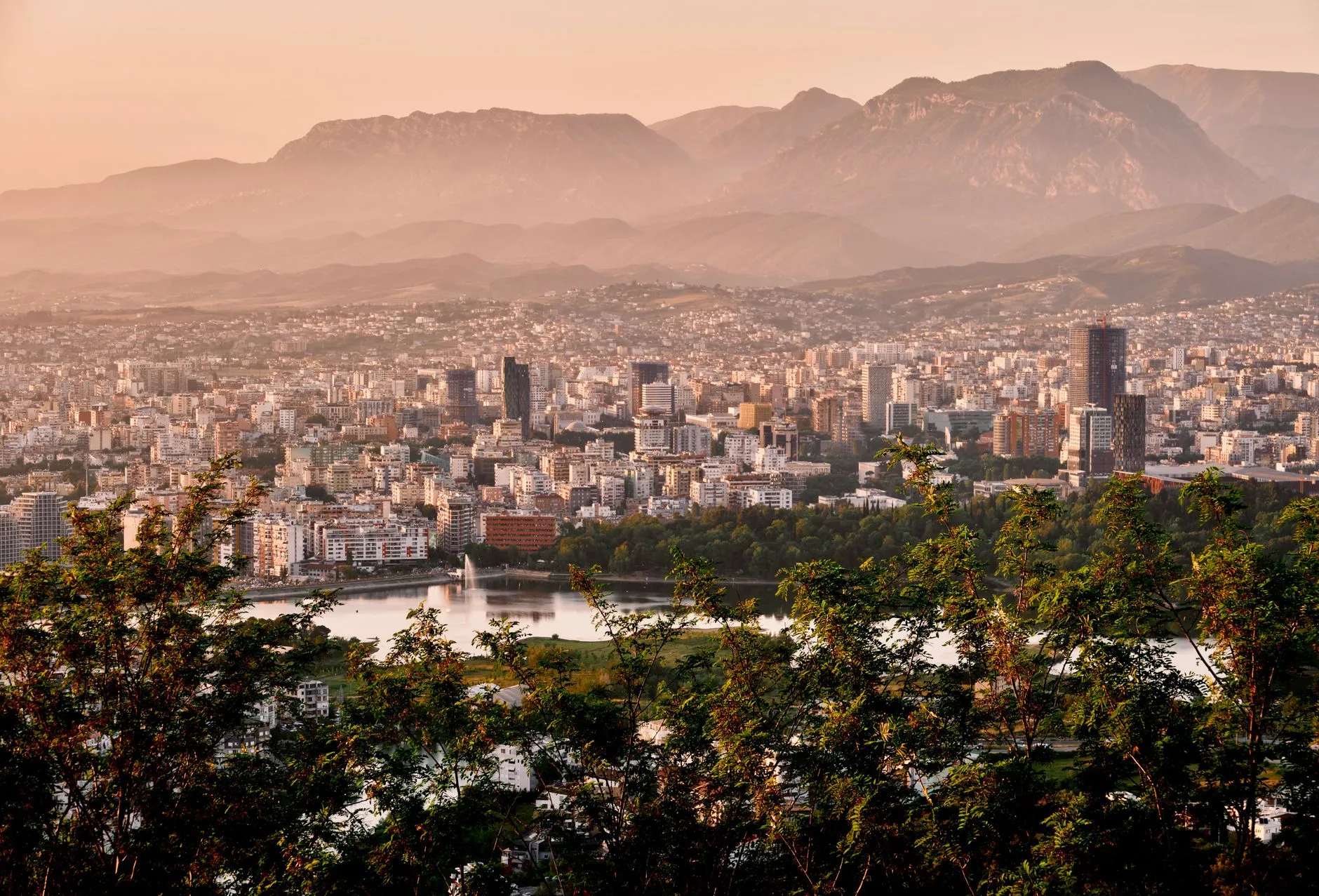
Tirana — the colourful capital, transformed over the past decade. Vast Skanderbeg Square, the Bunk’Art museum that tells the story of the dictatorship, the café-lined Blloku quarter, and Mount Dajti nearby. A day or two is enough, but it is essential.
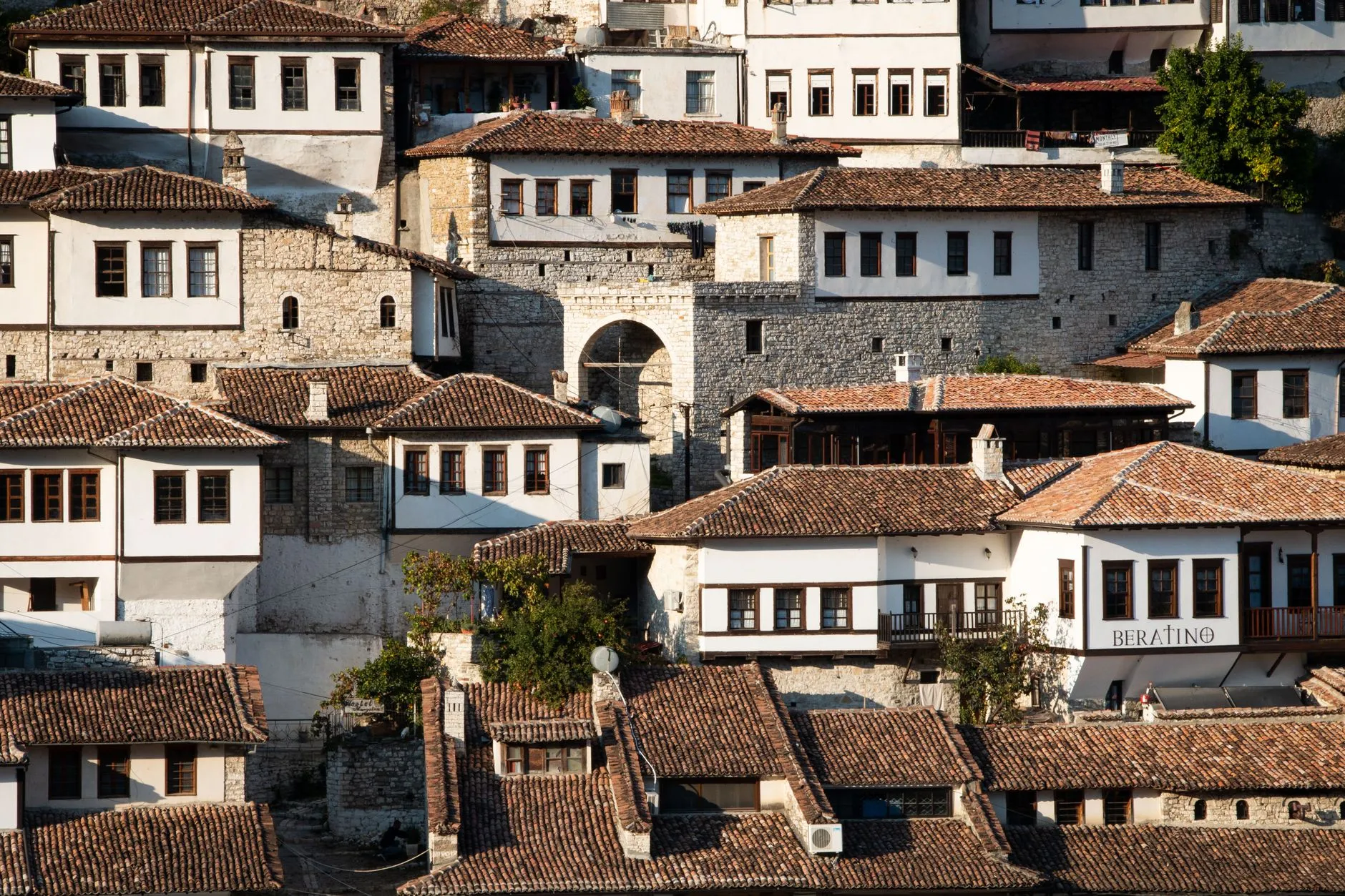
Berat — the “town of a thousand windows”, a UNESCO World Heritage Site. White-stone Ottoman quarters climbing a slope above the river, and a castle still inhabited today. One of the most beautiful towns in the Balkans.
Gjirokastër — another UNESCO stone town, fortified and silver-grey, birthplace of the dictator Enver Hoxha. Less touristed than Berat, and all the more pleasant for it.
Sarandë — the gateway to the south and the Riviera, facing the Greek island of Corfu. A lively resort town that makes an excellent base for Ksamil, Butrint and the Blue Eye spring.
Shkodër — the gateway to the north and the Alps, a relaxed cycling city with Rozafa Castle and the largest lake in the Balkans. All the cities and details in the cities guide.
Beaches and mountains — the real reason to come
If one thing makes you extend the trip, it is the landscapes. The south is the Albanian Riviera: a coastal strip between Vlorë and Sarandë with turquoise coves, stone villages on the slopes (Himara, Dhërmi, Vuno) and beaches like Gjipe reached only on foot or by boat. Ksamil, at the southern tip, is nicknamed “the Maldives of Albania” for the little islands you can swim out to.
The north holds the Albanian Alps (Bjeshkët e Nemuna, “the Accursed Mountains”). The classic way in is the Lake Koman ferry — a three-hour boat ride between cliffs rated among Europe’s most beautiful — and on to the village of Theth. The trek between Theth and Valbona is Albania’s most famous hike, a single day’s walk between two valleys. Guided Alpine treks save the logistics of getting there and finding village beds. More in the regions and landscapes guide.
Attractions you shouldn’t miss
Beyond the cities and beaches, a few sites justify a detour. Butrint, near Sarandë, is a World Heritage Site: a complete ancient Greek-Roman-Byzantine city inside a national park, one of the most impressive archaeological sites in the Balkans. A guided tour of Butrint from Sarandë fills in the historical context. Nearby is the Blue Eye spring — a pool of intense blue water welling up from an unknown depth. It is all gathered in the attractions and nature guide.
Food — half the experience
Albanian cuisine is a delicious crossroads of Mediterranean, Greek and Turkish. Byrek — a flaky filo pastry filled with cheese, spinach or meat — is the national street snack at 50–150 lek a slice. In restaurants, look for tavë kosi (lamb baked in yoghurt) and fërgesë, and in the south, fresh fish and seafood straight from the Ionian. Wash it all down with raki, the homemade brandy, or thick Turkish coffee. More in the food guide.
What it costs
Albania is significantly cheaper than the rest of Europe, and that is perhaps the most persuasive argument for going now, before prices rise.
- Budget: about €30–45 a day — hostels or cheap private rooms, furgons, street food and local restaurants.
- Mid-range: about €55–85 a day — a comfortable hotel or apartment, a rental car here and there, restaurants, and site admissions.
- Admissions: Butrint about 1,000 lek (€9); the Bunk’Art museum in Tirana 500–800 lek; many churches and mosques free.
The full breakdown, including currency, ATMs and whether to bring euros, in the money and budget guide.
Visa, money and entry
This is the easy part. Israelis enter visa-free for up to 90 days within any 180-day window — with no application in advance. The only requirements: a passport valid for at least six months, and an onward ticket. More in the visa and entry guide.
The currency is the Albanian lek (ALL); a handy rate to remember is roughly 100 lek to the euro. Euros are accepted at some accommodation and tours in the south, but not everywhere and not at a good rate — better to withdraw lek from an ATM. More in the currency and money guide.
Where to stay
In Tirana, base yourself around the Blloku quarter or Skanderbeg Square — everything is walkable, and that is where the cafés and life concentrate. Compare prices and availability for hotels in Blloku, Tirana in advance. In the south, Sarandë is the most convenient base for the Riviera and Butrint; stays in Sarandë range from seafront hotels to family apartments. More in the where-to-stay guide.
From here, dive in: pick a city or region to start with, explore the cities guide and the ready-made itineraries, and build the trip that fits you.
All the Albania guides
Everything we’ve written, in one place. Pick a topic and dive in.
Cities: Tirana · Shkodër · Berat · Gjirokastër · Sarandë · Vlorë · Durrës · Krujë
Regions & landscapes: The Albanian Riviera · Ksamil · The Albanian Alps · The Lake Koman ferry
Itineraries: 7–10 days · 14 days · A week in the south
Attractions & nature: Butrint · The Blue Eye spring · The best beaches · UNESCO sites
Food & cuisine: Albanian cuisine · Coffee, raki & cafés
Travel info: Visa & entry · Currency & money · Transport · Flights from Israel · SIM card · Safety · When to go · Budget · Where to stay · Albania with kids
Frequently asked questions
How many days do you need in Albania?
A week is enough for a serious taste — Tirana, Berat and the south around Sarandë. Ten to fourteen days let you add the Albanian Alps in the north and the whole coastline without rushing.
Do Israelis need a visa for Albania?
No. Israelis enter visa-free for up to 90 days within any 180-day window. You only need a passport valid for six months and an onward ticket.
When is the best time to fly to Albania?
May–June and September–early October. The sea is warm enough to swim, without the crowds and heat of August, when all of Albania heads to the coast.
Is there a direct flight from Israel to Albania?
Yes. There are direct flights from Tel Aviv to Tirana on El Al, Arkia and Israir, about three hours. In the low season a return fare sometimes drops below $200.
Working out where to stay?
Compare live prices and availability across hundreds of hotels, apartments and guesthouses in this area.