Cities in Albania
Tirana: A Guide to Albania's Capital
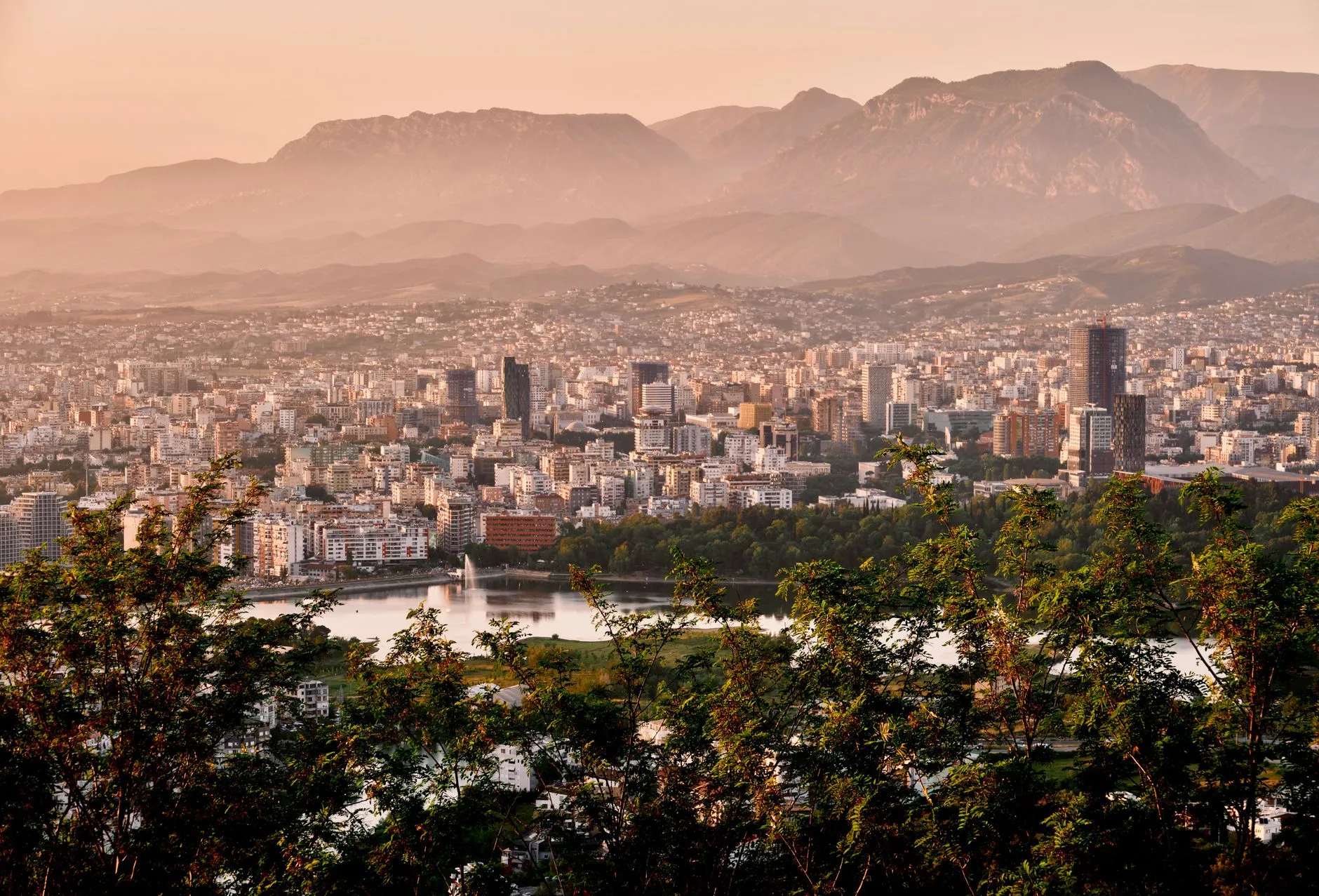
Tirana is one of Europe’s fastest-changing capitals. Thirty years ago it was grey and closed; today it is a colourful city of cafés, buildings painted in pastels on the orders of former mayor (and artist) Edi Rama, and young people filling the streets late into the night. Most trips to Albania open here, and rightly so — but don’t treat it as just a transit stop.
A day or two is enough to feel its rhythm: a morning of communist-era history, an afternoon in the cafés, and an evening in the nightlife district. As a bonus, it is the most convenient base for day trips to Krujë, Durrës and Bovilla Lake.
What to see
The heart is Skanderbeg Square, a vast pedestrian space with the national hero’s statue on horseback. Around it stand the historic Et’hem Bey Mosque (18th century, with striking frescoes inside), the clock tower you can climb, and the opera house. At the edge of the square stands the National History Museum, its façade decorated with a huge socialist mosaic — a good starting point for understanding the Albanian story.
Don’t skip the Bunk’Art museums: Bunk’Art 1 (a vast bunker on the city’s edge, by the cable car station) and Bunk’Art 2 (in the centre, near the square) tell the story of Enver Hoxha’s communist dictatorship, who built hundreds of thousands of bunkers out of paranoia. It is the strongest historical experience in Tirana. Admission is around 900 lek per site, or about 1,300 lek for a combined ticket to both (as of August 2026). Nearby is also the House of Leaves, the regime’s surveillance and secret-police museum, which completes the picture.
Blloku, the Pyramid and café life
The Blloku quarter was once a closed zone for the communist elite; today it is the city’s buzzing nightlife district, packed with cafés, bars and restaurants. That is where you’ll want to sit in the evening. Nearby is the Pyramid of Tirana, a brutalist concrete structure from the communist era recently restored into a tech hub you can climb — with a fine view over the city.
Tirana is a city of genuine café culture; Albania is among the world leaders in cafés per capita, and a long sit over an espresso or macchiato is part of the experience. For souvenirs and street food, drop into the New Bazaar (Pazari i Ri), a restored paved market with fruit and cheese stalls and small bars.
The Mount Dajti cable car
The easy escape from the city is the Dajti Ekspres cable car — a roughly 4.5 km ride climbing Mount Dajti above Tirana. From the top there are panoramic views over the city, restaurants and forest walking trails. The ride takes about 15 minutes and makes a good second-day stop, especially toward sunset — and in summer it is several degrees cooler than the city.
Getting around the city
Central Tirana is compact, and most sights — from the square to Blloku — are within walking distance. There are cheap city buses and taxi services (Speed Taxi and the local apps), but you rarely need them in the centre. Note that traffic is heavy and driving in the city is stressful — if you’ve rented a car, leave it parked until you head out of town.
How long, and who it suits
A day or two is enough for most travellers, and three if you want day trips as well. One day covers Skanderbeg Square, the bunkers and Blloku; a second for the Dajti cable car or Krujë; a third for Durrës or Bovilla Lake.
Tirana suits anyone interested in communist history and city life — it is the fastest-changing capital in the Balkans, and the bunker story is told here better than anywhere else. It suits you less if you want a beautiful old town: most of the building is modern, and the appeal here is energy rather than architecture.
Food and coffee
Tirana is a city of café culture — an espresso or macchiato costs 80–150 lek and you can sit for hours. Blloku concentrates the modern restaurants and bars, sometimes at prices high by Albanian standards. For local food at local prices, step out of Blloku — the streets around the New Bazaar (Pazari i Ri) offer home-style Albanian cooking and cheap street food. More in the food guide and coffee and raki.
Where to stay
The most convenient location is around Blloku or Skanderbeg Square — everything is walkable, and in the evening you’re in the heart of the nightlife. Compare prices and availability for hotels in central Tirana in advance, especially in season. The range is wide — from cheap hostels to new boutique hotels — and prices are still low by Western European standards.
Getting there
From Tirana International Airport (TIA) it is about 25 minutes by taxi (around 2,000–2,500 lek) or the cheap hourly Rinas Express bus into the centre. Direct flights from Tel Aviv land here in about 2 hours 40 minutes to 3 hours. From most Albanian cities you reach Tirana by furgon or bus; Berat is about two hours, Shkodër about two hours, and Sarandë 4–5.
From Tirana you continue in every direction. For the overview see the complete Albania guide, and for the other cities the cities guide.
Frequently asked questions
How many days should you spend in Tirana?
A day or two is enough for most travellers. One day for Skanderbeg Square, the bunkers and Blloku; a second for the Mount Dajti cable car or a day trip to Krujë.
Is Tirana safe for travellers?
Yes, Tirana is considered very safe, including at night and for solo travellers. Normal caution is enough.
Do you need a car in Tirana?
No. The centre is compact and walkable, and every destination around it is reached by furgon, bus or cheap taxi. A rental car only starts to help once you continue to the Riviera or the Alps.
Working out where to stay?
Compare live prices and availability across hundreds of hotels, apartments and guesthouses in this area.