Cities in Albania
Gjirokastër: The Stone City
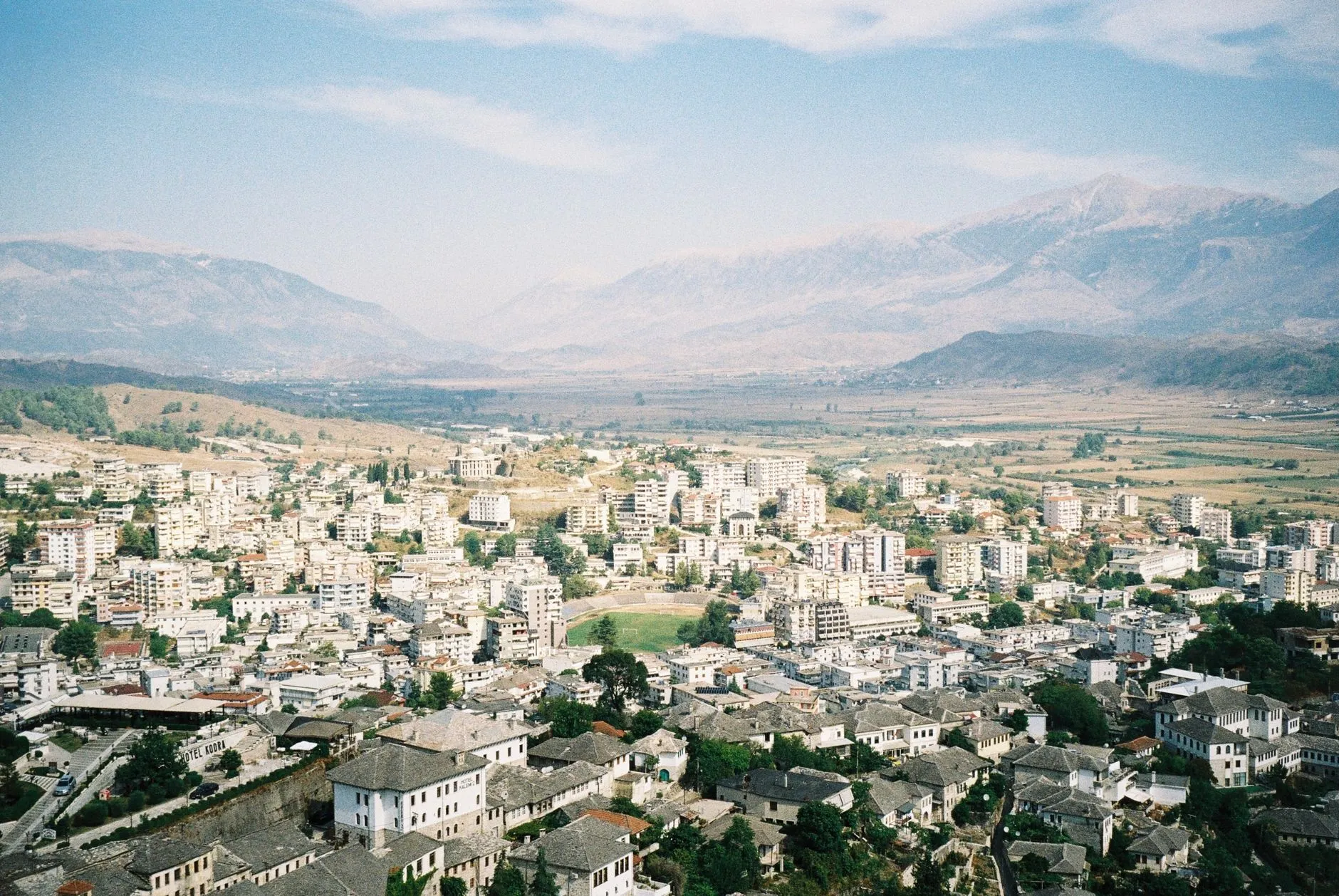
Gjirokastër is the “grey sister” of Berat: a fortified Ottoman stone town whose silver-grey roofs climb a steep slope in the Drino valley. It too is a UNESCO World Heritage Site, also full of 18th-century stone houses, but less touristed — and all the more pleasant for anyone after quiet. It is also the birthplace of dictator Enver Hoxha and the celebrated writer Ismail Kadare.
Gjirokastër is not just a beautiful town but a lesson in Albanian history — from the Ottoman era, through the national struggle, to the communist years. Most travellers stop on the way south to Sarandë, but it deserves at least half a day, and better a night.
What to see
Gjirokastër Castle dominates the town from the hilltop — one of the largest in the Balkans. Inside, surprisingly, sits an American spy plane from the Cold War, alongside a collection of cannons and a weapons museum; in summer it also hosts the National Folklore Festival. The view from the walls over the town and valley is worth the climb alone.
In the old town is the bazaar (Pazari i Vjetër), a cobbled junction of shops, cafés and souvenir stalls — a good place to buy hand-embroidered tablecloths, a local speciality. Not far away is the Zekate House, a grand Ottoman mansion from 1812 with decorated ceilings and reception rooms that shows how the town’s wealthy once lived. The Ethnographic House Museum (built on the site of Hoxha’s birthplace) is also worth a visit, and curious travellers can tour a communist-era nuclear bunker tunnel beneath the town.
Local food
Gjirokastër’s cooking is well known in Albania: try qifqi — fried rice-and-egg balls unique to the town — alongside cheeses, roast lamb and regional wines in the old restaurants around the bazaar.
Getting there
Gjirokastër sits on the main highway (SH4) between Tirana and the south, making it a natural stop. Buses and furgons connect it to Tirana (about 4 hours) and Sarandë (about 1.5 hours). Note that the bus station is in the modern lower town, from where you reach the old town by a short taxi ride or a steep climb.
Where to stay
Staying in a traditional stone house in the old town is part of the experience — rooms with timber ceilings, carpets and castle views. Compare stays in Gjirokastër in advance; in season book early, as the number of inns in the old quarter is limited.
For the full picture see the Albania guide and the other cities.
Frequently asked questions
Berat or Gjirokastër — which is better?
Both are beautiful UNESCO sites. Berat is white, graceful and on a river; Gjirokastër is grey-stone, fortified and less touristed. If your route runs south, Gjirokastër falls on the way to Sarandë.
How long do you need in Gjirokastër?
Half a day to a day. The castle and bazaar in the morning, and you can fold in the Blue Eye spring on the way south to Sarandë.
Are Gjirokastër's lanes easy to walk?
They are steep and paved with smooth stone, and sometimes challenging. Good walking shoes matter, and the pavement is slippery in the rain. In return you get one of Albania's most photogenic, authentic towns.
Working out where to stay?
Compare live prices and availability across hundreds of hotels, apartments and guesthouses in this area.